
Layoffs, AI, and Purpose
Become More Human

Never Mind the Heat, It’s the Humidity
July was hot as hell in 2024. But then again in Arkansas it’s hot every July. The physical heat of an Arkansas summer was incidental to another heat that brought my Substack into focus. I had just graduated with my post-graduate certification in Machine Learning, a branch of the AI ecosystem.
Now two years later, the heat with which AI is moving is only matched by the thickness of the air around it. My early experience with Machine Learning was uneventful, but what followed in the next four months was nothing short of Biblical. Perplexity, ChatGPT, and Claude ramped up fast, and became mountainous. Pundits declared an AI bubble, promising it would soon pop. Billions and billions of dollars entered the market. This phenomenon isn’t a U.S. thing. It’s global. It affects all of humanity.
The reach of AI went far beyond the models themselves; the demand for the chips, the rare earth materials, the data centers and the power grid itself suddenly went parabolic. If AI is bringing the heat, everything that supports it must definitely be the humidity.
If AI is a bubble, I’m not hearing any popping sounds.
AI and Glazed Eyes
It’s difficult to talk to people about this stuff, let alone write about it. Eyes glaze over. People pick up their phones. My discussion soon elicits disconnected “ahhs”, “ohhs”, and “mhms” when an uninteresting topic comes up in conversation. You know the scene. The problem isn’t wrapped in the ‘uninteresting’, it is the incomprehensible. I (the nerd) is trying to dig deep, but everyone else is planning their vacation at St. Thomas. At least that was the experience during the last couple of years. The implications that AI offers seem like fantasy. Too much to comprehend. It’s wild and distant. Not a ‘now’ thing. I get it.
I can relate to those glazed eyes. By the end of seven months of intensive study, I wanted the program to be over. In that summer of 2024, I felt that all this ‘AI’ stuff was just a new kind of calculator. I did virtually nothing with the new knowledge I worked so hard to obtain. It was like knowing the secret to a magic trick. Once you know the secret, it fails to impress. I understood the math. Learned the programming. It all just seemed kind of ‘meh’.
In October of the same year I started playing with the actual front-end of the thing. Not training models, not buried in the math, not swimming in the statistics. Actually using the thing. First Perplexity, then ChatGPT, and finally settling on Claude. The implications started to click. Both good and bad.
But once you use it a few times, the implications become real. That seems to be the case with every technological framework. Was the cotton gin that impressive at first glance? Did people from the outset think “This is going to change everything!” or was it more like, “Ok, cool. What do we do with it?” After two years the ‘What do we do with it part’ is scaling. Fast.
The impossible became inevitable, inescapable.
Layoffs
Once again, here in July of 2026 it is hot as hell. We host a lot of parties. But today, not so many eyes glaze over when I broach the subject of AI. People willingly talk, and I want to hear what the masses are finally, thoughtfully putting together. The conversations have grown beyond my monologuing, and have started to get engaged.
The idea of losing a job tends to be the top of the anxiety ladder for ‘Americans’ (U.S. Citizens for the sake of brevity), so it makes sense that fear is one of the first emotions when people start putting it all together. With all the amazing things AI is able to do, it would seem that jobless numbers are a thing the populace is fixated on. Of course the media is counterproductive in quieting the fear. Media heightens fear, heightens worry and gives a sense of impending doom. Media does what it does.
The impact of AI should not be ignored, but I don’t think it’s the AI we as humans have a real issue with. Joblessness is a big deal, but it’s a bigger deal that we seem to be losing our humanity. We talk about being ‘aligned’ in the business cycle. Our alignment with technology is a grievous misalignment. An alignment that undercuts and undermines the way that our humanness is captured, cultivated, and cared for.
The adoption of anything misaligned, whether an AI, a television or some recreational drug, is an adoption of dehumanization. A kind of de-evolution. Literacy rates, falling. Shrinking attention spans. And the rise in FOMO has made our culture more listless than ever. We just can’t sit still. We are becoming. Un-human. We are now strange denizens lurking in our tech-laced homes. We are stripped of purpose.
Purpose
I’ve written blog posts in several different locations over the years. Pretty much just writing what I want to write about. No real defined purpose. Even the beginning of this Substack seems to follow that ‘rudderless’ boat concept. When I fired it up in 2023, a defined purpose was elusive.
Two years after that hot day in 2024 there has been a convergence of all these weird siloed interests of mine. They all had something in common. They are inexorably human. Why am I here on Substack? To bring detail and color to the experience of hitting my damn thumb with a hammer! To describe the vividness of what it’s like to run screaming like a child from an unseen wasp nest while watering my tomatoes. (happened last week) To paint with words what a sweet kiss from my wife tastes like, even after thirty-three years of marriage.
What is the purpose? To keep chasing whatever that thing is we still call humanity. No. To re-learn HOW to chase after that thing we still call humanity. And in that process, ironically, tell those stories here in cyberspace.
This space of pain, fear and sweetness is my response to that hot day in July of 2024. It’s a response to the cycle of eat, work, sleep, pay taxes. It’s a response to the slow attrition of purpose.
Planting Trees
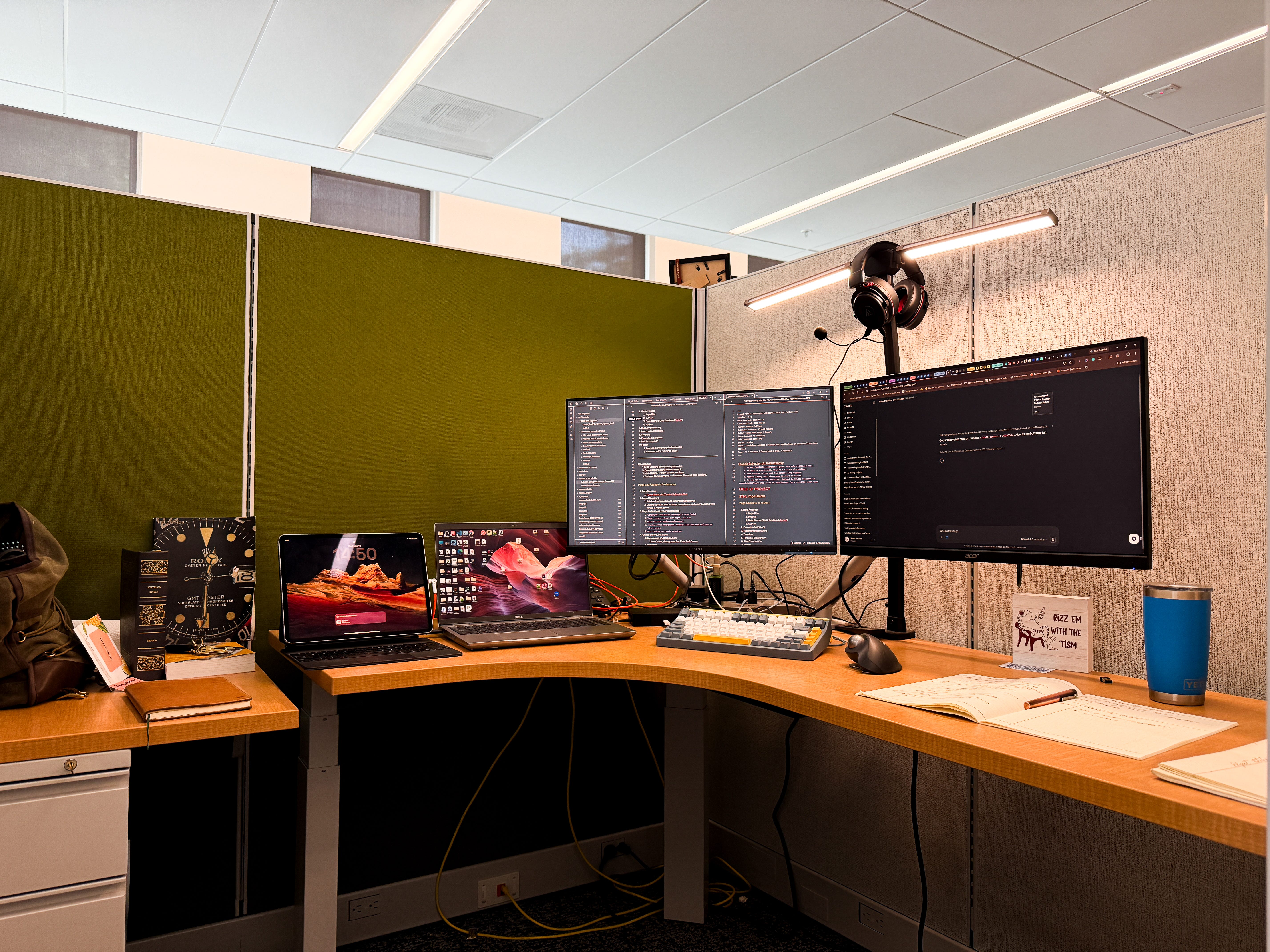
As a project manager in the IT space I am particularly aware of the growing capabilities of our current AI offerings. ChatGPT, Claude, Gemini, etc. are all part of a very small family of AI technologies called ‘Large Language Models’ or LLMs. The key takeaway of that fact is that we are only seeing the first wave of AI capability. As new pieces of the AI universe become more and more mainstream and available the media will serve up bigger and bigger buckets of fear. It’s important we keep our heads.
There is an old adage you may have heard. “When is the best time to plant a tree?” The answer? “Twenty years ago.” “When is the next best time to plant a tree?” Answer? “Today”. Our misalignment with technology points to the same idea. “When is the best time to reclaim humanity?” The answer? “Twenty years ago.”
Rapid AI growth is an understatement, and while I cannot predict the future I figure the answer to “When is the next best time to reclaim humanity?” is now. The time to engage in humanity through the analog of life is also now. The time to curate a collection of activity that is distinctly human is now. We should all be in the process of discovering purpose, or at the very least, be discovering what it is and what it means.
The Resurgence of Analog
The goal isn’t to burn down our data centers (although there is a growing anti-data center sentiment), or take a hammer to our laptops. I love my dishwasher, despite the fact occasionally I’ll wash my dishes the analog way. It’s not to become a luddite, burning candles at night or making dresses out of flour sacks like they did in the 1800s. The goal is to REALIGN the digital.
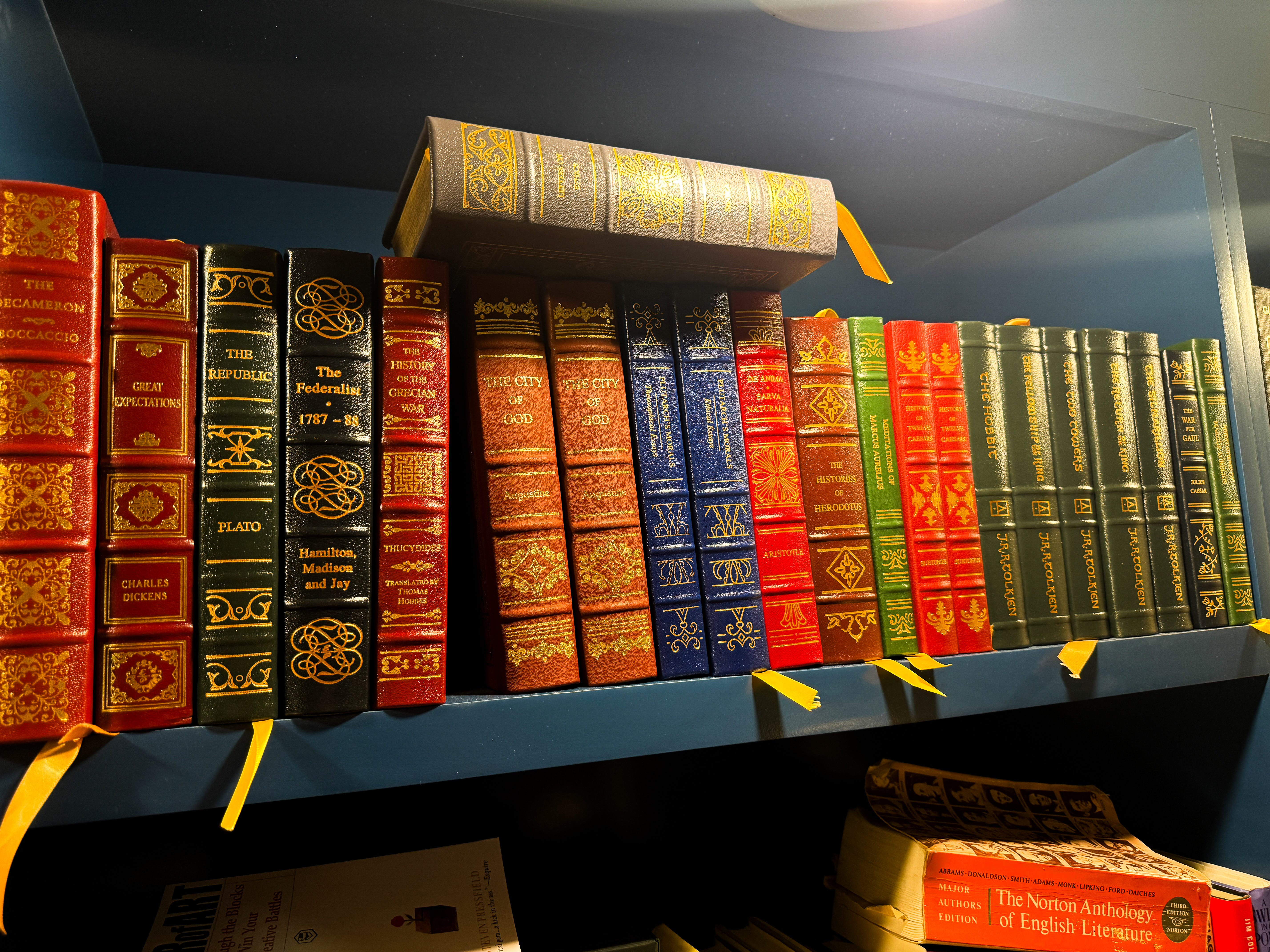
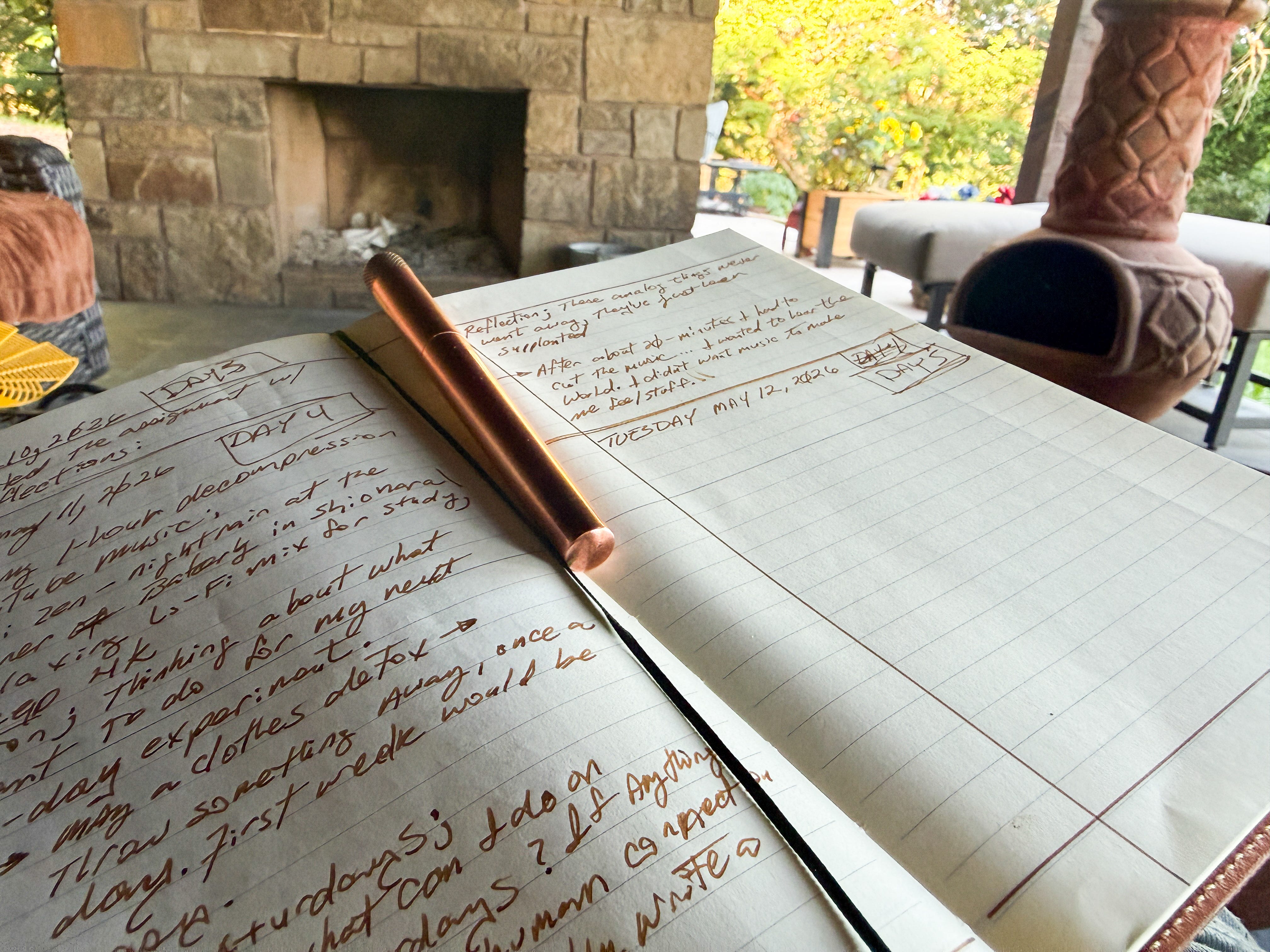
The rediscovery of more analog methodologies has already started. In some schools they are bringing back cursive writing. Film cameras have experienced a bit of a resurgence. These are not isolated domains. They signal a refreshed perspective casting a critical eye on the digital life. Humans are building studies with real leather-bound books. We are re-learning how to read, write, think and feel. Even while many of us will still copy-paste YouTube links into a Gemini Notebook so we don’t have to watch two hours of content, some will dig deep and explore the narrative. We are beginning to understand that honest note-taking will always be superior. It will always be more human. We are reconnected to the page, to the beauty, to the art, retraining neurons to think critically, instead of compiling a digital list of links.
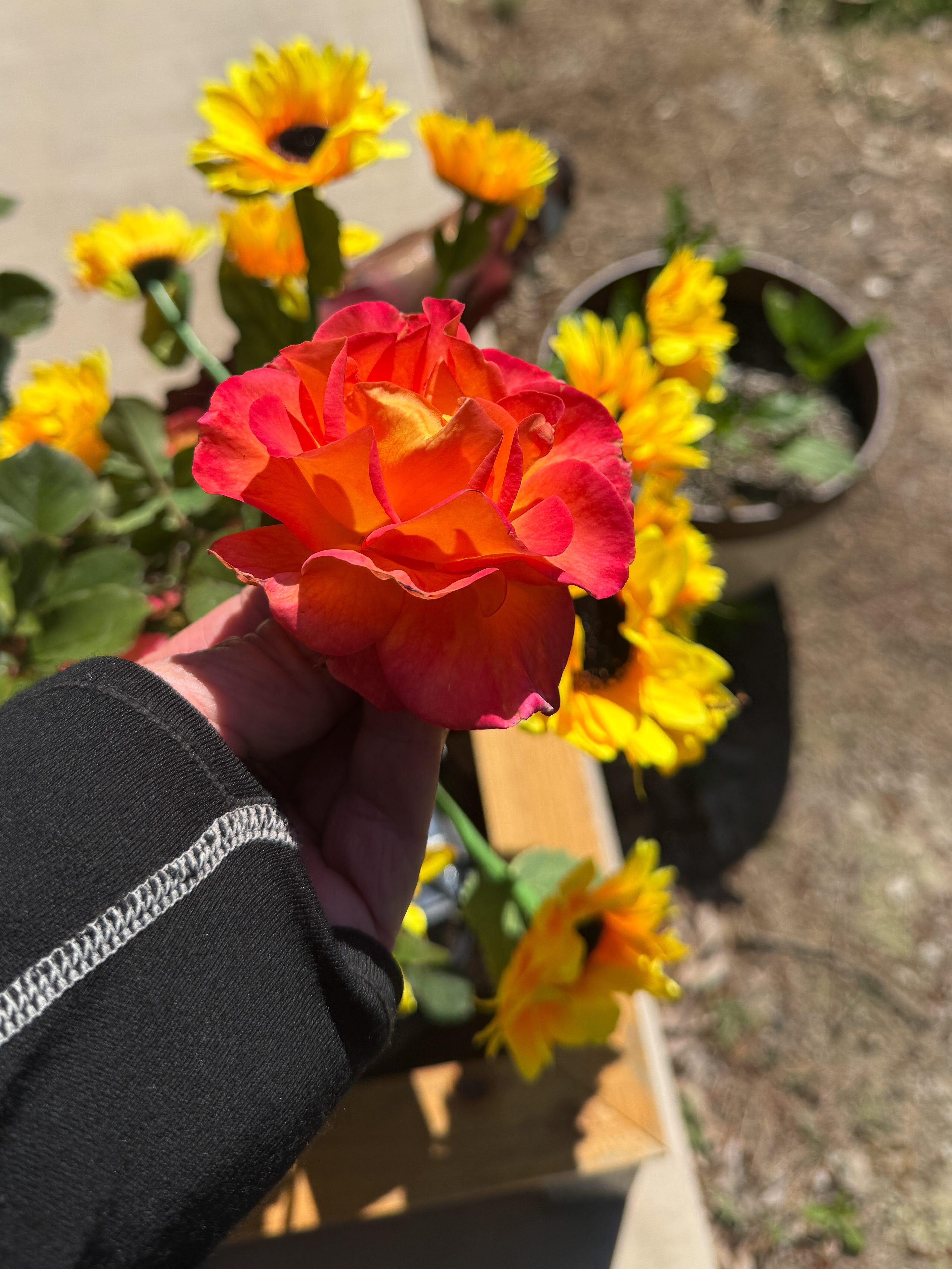
As we trip through the once weeded garden, we must work to find the roses again. We must find those flowers of rhetoric. We must compose poetry. We must slow down, bend over and do the work. Not simply have AI describe it all to us. And God help us when the AI starts the dialogue with: ‘Once upon a time, there were roses. There was beauty. There was art.’
Somewhere between falling literacy rates, and the mental health crisis, what we find is a resonant theme: lack of sleep, community, and purpose. Media, like the unweeded garden, has been overgrown with the weeds of dissatisfaction, self-loathing, and a dedication to FOMO, war, and intolerance of others. Our electronic addictions are igniting a meltdown of society. All the evidence points to it.
While I am as guilty as most for depending on the ‘thinking machines’, I have been taking steps to unplug. To understand presence, value, purpose. To make an effort to become more... human, especially that hot Arkansas July.
Robert: Insightful piece.
I’ve had day jobs as a DBA and sysadmin. My LinkedIn feed now rife with sad tales.
I did a UC Berkeley AI certificate program last year, not as in-depth as yours, more about principles and business strategies.
My nephew (who lives ten blocks from me in San Francisco) has an MBA in data science from MIT and works at Anthropic.
@John Kluthe : My degree was Classics, Latin and ancient Greek. A couple of years ago I decided to do a refresh/fill-in-the-gaps thing of my classical education. You’ve prompted me to scroll way back to when I first downloaded Claude and to share (either to amuse you, or to embarrass myself, or both) a couple of the very first prompts/questions I asked.
Good article, Rob. I find AI helping me get back into poetry and being thoughtful. I used to really enjoy poetry when I was in my 20s. I’m using AI now to put me onto authors that I’ll more likely enjoy. And while I don’t use it to send ‘I love you’s to my wife of 24 years, I do use it to help me be creative with gifts notes and little thoughtful things (don’t be impressed- I have it on good authority that I still suck at those gestures).
We’re productive people. As we better understand the capabilities of AI, well become more productive as employees, lovers, friends, and family members.
As far as marketable skills (job fodder) goes, we’ll adjust.